


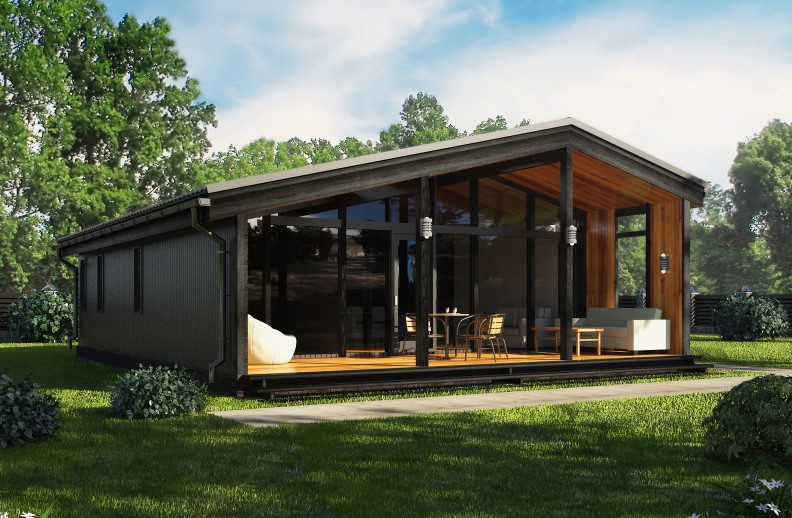
Building a home is a significant decision that requires substantial financial investment, time, and careful planning. The modern market offers various housing construction options, and many people find themselves choosing between two popular alternatives – prefab houses and traditional construction. Prefab homes, built using factory-made modules or panels, are gaining popularity due to their speed of assembly and cost-effectiveness. Meanwhile, traditional construction offers durability and maximum customization of the project. But which option is more cost-effective? Let’s explore the key features of both.
How Do Prefab Houses Differ from Traditional Construction?
The main difference between these two options lies in the construction method. Prefab houses are built using factory technology: their components (panels, modules, or frames) are manufactured at a factory and then transported to the site, where they are assembled into a complete structure. This significantly reduces construction time and minimizes dependence on weather conditions.
Traditional construction, on the other hand, follows classical methods—laying the foundation, building walls, installing floors and roofs, and conducting interior work—all performed directly at the site. This process takes longer, requires more resources, and is affected by weather conditions.
Advantages and Disadvantages of Prefab Houses
In recent years, prefab construction https://unitfab.com/en has been gaining popularity due to a range of benefits that make it a convenient solution for many homeowners.
Pros of prefab houses:
- Fast construction – these homes can be built in just a few months, and modular houses can even be completed within weeks
- Cost-effectiveness – optimized material production often makes prefab houses more affordable than traditional construction
- Energy efficiency – factory production ensures high-quality insulation, reducing heating and energy costs
- Eco-friendliness – many manufacturers use modern, environmentally friendly materials
- Predictable costs – fixed pricing prevents unexpected expenses that can arise in traditional construction
However, there are some limitations to consider:
- Limited design flexibility – compared to traditional construction, prefab homes may have fewer architectural customization options
- Logistics challenges – delivering large modules or panels requires good site access and strict scheduling
- Material restrictions – some prefab designs may have structural limitations that prevent the use of heavy or specialized materials
Advantages and Disadvantages of Traditional Construction
Despite the extended construction timeline, traditional houses remain a popular choice due to their undeniable benefits.
Pros of traditional construction:
- Full customization – homeowners can create a unique architectural design without limitations on shape, size, or layout
- Long-term durability – brick, stone, and concrete homes are known for their structural strength and can last for centuries
- Unlimited material choices – homeowners can choose any finishing materials based on budget and aesthetic preferences
However, traditional construction also has some disadvantages:
- Lengthy construction process – projects can take several months or even years, depending on complexity and weather conditions
- Higher costs – requires substantial financial investment for materials, labor, and infrastructure
- Risk of budget overruns – unforeseen expenses may arise, significantly increasing overall costs
Which is More Cost-Effective: Prefab or Traditional Construction?
Choosing between a prefab house and traditional construction depends on several important factors, including budget, project timeline, land conditions, and personal preferences. If the priority is speed and efficiency, a prefab house becomes the ideal choice, as it allows for quick assembly without long waiting periods. Additionally, it offers predictable costs, making it a great option for those with a limited budget who want to avoid unexpected expenses. Another significant advantage is energy efficiency, as prefab homes are often built with modern insulation technologies that help reduce heating and cooling costs. Moreover, for homeowners facing challenging landscapes or access limitations, prefab construction simplifies the process, as most components are manufactured off-site and require minimal on-location work.
On the other hand, traditional construction is the better option for those who prioritize customization and unique architectural design. It allows for complete freedom in choosing materials, layouts, and aesthetic details, ensuring that the final home fully meets individual expectations. Durability is another key factor, as traditional homes, built with brick, stone, or concrete, are often designed to last for generations. However, this approach requires significant time and financial investment, as the construction process can take months or even years, depending on the project’s complexity. For those considering resale value, traditional homes often hold a higher market price, making them a worthwhile long-term investment.
Both construction methods have their advantages and disadvantages, and the choice between them depends on personal priorities. Prefab houses offer speed, modern technology, and cost savings, while traditional construction provides durability, customization, and complete control over every aspect of the project.